If you have ever searched for cold sore remedies online, you have probably come across the claim that Vegemite or Marmite can help. Australian parenting blogs and UK health forums are full of accounts from people who swear by dabbing a little yeast extract on a cold sore and waking up to faster healing. The question: "is Vegemite good for cold sores?": is one of the most commonly asked food-related herpes questions online.
The short answer: there is no clinical evidence that Vegemite or Marmite can treat or heal cold sores. But the longer answer is more interesting. Both spreads contain compounds (B vitamins, lysine, and in Marmite's case vitamin B12) that have legitimate connections to immune health and herpes management. Understanding what they do and don't contain helps explain why the anecdotes persist even without clinical proof.
This article breaks down the nutritional profiles of both spreads, evaluates the theoretical basis for their use on cold sores, examines the anecdotal claims, and puts them in the context of what works for managing herpes simplex virus (HSV-1).
Simplix Viral Defense
Cold Sore & HSV Support
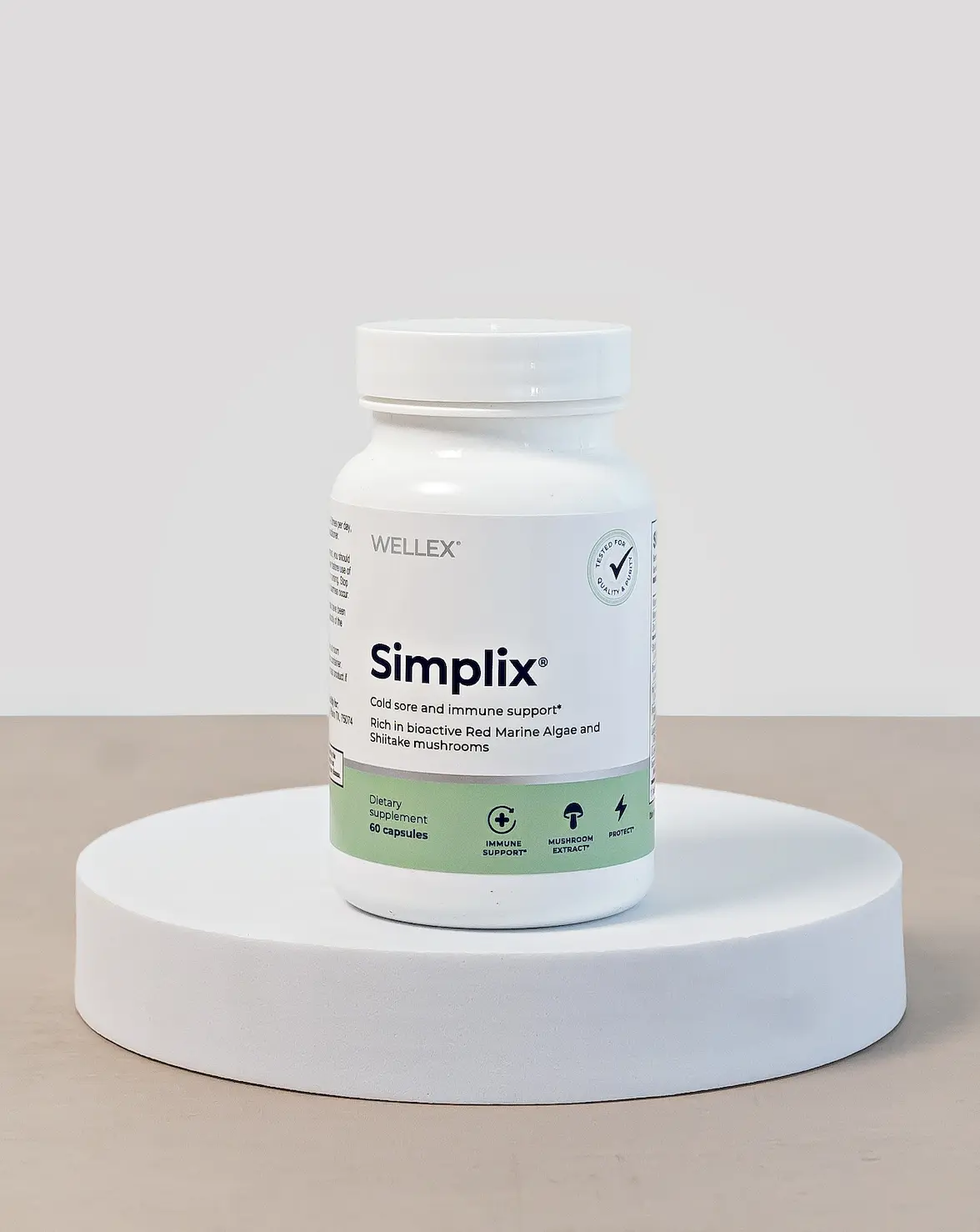
Simplix Viral Defense
Cold Sore & HSV Support
Synergistic formula combining L-Lysine, shiitake mushroom, and marine bioactives for comprehensive immune support.
SHOP NOW & SAVE 15%What Are Vegemite and Marmite?
Both Vegemite and Marmite are yeast extract spreads: thick, dark, intensely salty pastes made from the by-products of beer brewing. They have loyal followings in Australia and New Zealand (Vegemite) and the UK and South Africa (Marmite), typically eaten in small amounts on toast or crackers due to their powerful flavour.
Despite their similar origins, they are not identical products. Marmite is the British original, first produced in 1902 and now owned by Unilever. It has a slightly more complex, richer flavour profile with molasses undertones. Vegemite, developed in Australia in 1922 as a local alternative during a Marmite supply shortage, has a stronger, more bitter, purely savoury profile.
Nutritionally, both are concentrated sources of B vitamins and glutamates, but they differ in one key area: Marmite contains vitamin B12, while Vegemite does not (though some newer fortified Vegemite variants now include B12). This difference turns out to be relevant when evaluating the cold sore claims, because vitamin B12 has some limited evidence behind it for mouth ulcer management.
Nutritional Comparison Per 5g Serving
A standard serving of either spread is approximately 5 grams (about one teaspoon). At that serving size:
- Vegemite: B1 (thiamine) ~25% RDI, B2 (riboflavin) ~25% RDI, B3 (niacin) ~25% RDI, folate ~25% RDI. No vitamin B12. Lysine: approximately 50–70mg per serving.
- Marmite: B1 ~25% RDI, B2 ~25% RDI, B3 ~25% RDI, B12 ~100% RDI (full daily requirement in one serving). Lysine: approximately 50–70mg per serving.
Both are high in sodium (~170–200mg per 5g serving) and contain glutamates that give them their umami flavour.
The Anecdotal Case: Why People Think It Works
The cold sore remedy claim for Vegemite gained widespread attention after Australian blogger Mel Watts posted about applying it directly to cold sores and mouth ulcers. She reported dramatic improvements: pain reduction within hours and visible healing within a day. The post went viral in Australian parenting communities and has been shared thousands of times.
Similar accounts exist for Marmite in the UK, particularly for mouth ulcers (aphthous stomatitis) rather than herpes cold sores specifically. Many users describe topical application reducing pain and inflammation noticeably.
What Might Be Driving the Effect
A few mechanisms could explain the anecdotal relief, even without antiviral efficacy:
- Salt content: Both spreads have an extremely high sodium concentration. Salt applied topically to a cold sore creates a hypertonic environment that can draw moisture out of lesion tissue, temporarily reducing swelling and creating an environment less hospitable to bacterial secondary infection. The salt also causes the stinging sensation that users report, which may paradoxically be interpreted as evidence that "it's working."
- Glutamates and pH: The glutamic acid content and slightly acidic pH of yeast extracts may create a brief local environment unfavourable to HSV surface activity, though this effect would be transient at best.
- Placebo effect: The active, deliberate act of treating a cold sore, regardless of the agent used, is associated with reported improvement in multiple anecdotal remedy traditions. The ritual of treatment itself has psychological value.
- B vitamins: Topically applied B vitamins are not well absorbed through skin; the nutritional benefits of Vegemite or Marmite on cold sores would come primarily from ingestion, not topical application.
None of these mechanisms constitutes antiviral activity against HSV-1. The virus itself is not killed or suppressed by yeast extract. But the anecdotes are real, people do experience relief, and the salt-driven dehydration of lesion tissue may speed the resolution of the blister phase.

The Lysine Question
The most scientifically grounded reason to be interested in Vegemite and Marmite for herpes is their lysine content. Lysine is an amino acid with well-documented antiviral properties against HSV: it competes with arginine, the amino acid HSV needs to replicate, for intestinal absorption and cellular uptake. When lysine is high relative to arginine, the virus cannot replicate efficiently. This is the basis for lysine supplementation as a herpes management strategy, supported by multiple clinical studies showing 20–40% reductions in outbreak frequency.
Yeast extract spreads do contain lysine. However, a typical 5g serving provides only approximately 50–70mg of lysine. Clinical studies on lysine and herpes use doses of 1,000–3,000mg per day. You would need to eat roughly 15–60 servings of Vegemite or Marmite daily to approach clinically relevant lysine doses: far beyond any reasonable dietary use, and with a sodium intake that would be dangerous.
In other words: the lysine in yeast extract spreads is real, but at normal serving sizes it is nutritionally insignificant for herpes management. If you want to use lysine as an antiviral strategy, a dedicated lysine supplement at 1,000–1,500mg daily is the evidence-based approach, not a teaspoon of Marmite on toast.
Marmite's B12 Advantage: Real but Niche
Where Marmite stands apart from Vegemite is its vitamin B12 content. A single 5g serving of Marmite provides approximately 100% of the adult daily requirement for B12, making it one of the best plant-based B12 sources available, which is why it is particularly valued by vegetarians and vegans.
Vitamin B12 has some association with mouth ulcer management: specifically, aphthous stomatitis (canker sores), which are not caused by herpes simplex virus. A small 2009 study published in the Journal of the American Board of Family Medicine found that 1,000mcg of B12 daily reduced the frequency of canker sore recurrences compared to placebo. These are not the same as cold sores: canker sores are inflammatory lesions of unknown cause, while cold sores are caused by HSV-1 and are a viral infection.
This distinction matters for evaluating the claims. If someone is treating a canker sore with Marmite's B12, they may see a benefit. If they are treating an HSV cold sore with B12, the evidence does not support a meaningful effect. The two types of mouth sores are frequently confused by the general public, which may partly explain why Marmite testimonials vary so widely.
For people who are B12 deficient (a real risk for vegans, elderly individuals, and those on metformin) Marmite can be a valuable dietary addition that supports overall immune function. A well-functioning immune system helps keep herpes in latency. But this is indirect support, not a direct antiviral effect.
What Topical Application Does
Applying Vegemite or Marmite directly to a cold sore is the approach described in most online accounts. From a clinical perspective, here is what topical application can and cannot achieve:
What it can do:
- The high salt concentration draws moisture from the lesion surface, which may temporarily reduce blister size and swelling
- The acidic environment may inhibit secondary bacterial contamination of open lesions
- The stinging sensation may have a mild counter-irritant effect that temporarily dulls pain perception
- Regular application keeps the lesion dry, which can promote faster crusting and healing of the blister stage
What it cannot do:
- Kill or inactivate HSV-1 at the lesion site. Neither spread has virucidal activity against herpes viruses
- Prevent the outbreak from completing its natural course
- Reduce viral shedding or lower transmission risk
- Provide B vitamin or lysine benefit through the skin. These compounds are not meaningfully absorbed transdermally
Topical application may cause stinging and irritation, especially on cracked or open lesions. For some users, this irritation is uncomfortable enough to outweigh any perceived benefit. People with sensitive skin should be particularly cautious.
If you want a natural topical option with antiviral evidence, medical-grade manuka honey (UMF 15+) and topical lemon balm extract have clinical evidence behind them that Vegemite and Marmite do not. Our article on the strongest natural antivirals for herpes covers both in detail.
Dietary Use vs. Topical Use: A Different Calculation
The case for Vegemite and Marmite as dietary additions for people managing herpes is stronger than the case for topical use, even if it falls far short of therapeutic significance on its own.
Eaten regularly as part of a varied diet, both spreads contribute B vitamins that support immune function, nerve health, and overall energy metabolism. Marmite specifically provides B12 that is otherwise difficult to obtain from plant-based diets. A well-nourished immune system is more effective at keeping HSV dormant between outbreaks, so the indirect contribution of B vitamins to herpes management is not nothing. It just is not the specific antiviral action that the cold sore remedy narrative implies.
For practical dietary management of herpes, the most evidence-based approach remains:
- Maintaining a high lysine-to-arginine ratio in your daily diet (check our lysine-arginine food database for specific foods)
- Lysine supplementation at 1,000–1,500mg daily if dietary lysine is insufficient
- Adequate B12, zinc, vitamin D, and folate for overall immune competence
- Stress management and consistent sleep as the most important non-dietary factors
Vegemite and Marmite can be enjoyed as nutritious condiments that contribute to B vitamin intake in a tasty way. They are not cold sore treatments.
Vegemite and Marmite for Cold Sores FAQs
Is Vegemite good for cold sores?
There is no clinical evidence that Vegemite is good for cold sores in any antiviral sense. Its high salt content may temporarily reduce swelling and keep the lesion dry when applied topically, which some users interpret as healing, but Vegemite does not kill or suppress the herpes simplex virus. For food-based approaches with actual antiviral evidence, medical-grade manuka honey (UMF 15+) and topical lemon balm extract are much better supported by research.
Can applying Vegemite or Marmite heal cold sores?
No, there is no scientific evidence that applying Vegemite or Marmite directly to cold sores cures or heals them. The salt content may provide temporary drying of the lesion and mild pain relief due to counter-irritant effects, but neither spread has virucidal activity against HSV-1. Antiviral cream (acyclovir or penciclovir) or medical-grade manuka honey are the evidence-based topical options.
Do Vegemite and Marmite have antiviral properties?
Neither Vegemite nor Marmite has been shown to have antiviral properties against herpes simplex virus. Their nutritional benefits are primarily the B vitamins they contain, which support general immune health rather than directly suppressing HSV replication. Some natural antiviral compounds (like glycyrrhizin (licorice root), EGCG (green tea), and propolis) have antiviral activity against HSV in laboratory studies, which Vegemite and Marmite do not share.
Is the lysine in Vegemite or Marmite effective against herpes?
The amount is too small to be clinically meaningful. Both spreads contain approximately 50–70mg of lysine per 5g serving. Clinical studies on lysine and herpes use 1,000–3,000mg per day.
Reaching therapeutic lysine doses from yeast extract alone would require dangerously high sodium intake. A dedicated lysine supplement at 1,000–1,500mg daily is the practical approach for using lysine to manage herpes.
Can vitamin B12 in Marmite help with mouth ulcers or cold sores?
Vitamin B12 in Marmite has some evidence for reducing recurrences of aphthous ulcers (canker sores), which are inflammatory lesions distinct from herpes cold sores. If you are treating a canker sore, Marmite's B12 content may be relevant, particularly if you are B12 deficient. If you are treating a herpes cold sore (caused by HSV-1), B12 does not have antiviral activity against the virus and the benefit is indirect at best.
Is it safe to apply Vegemite or Marmite topically on cold sores?
Topical application is not medically recommended but is unlikely to cause serious harm in most people. The main risks are stinging and irritation from the high salt content, especially on open or cracked lesions. For sensitive skin or broken skin, the salt can cause significant discomfort.
It will not speed healing in any meaningful way and should not replace evidence-based treatment. If topical application causes worsening irritation, discontinue immediately.
Should I rely on Vegemite or Marmite instead of antiviral medication?
No. Medical treatments and antiviral medications (acyclovir cream topically, or valacyclovir orally) remain the most effective and recommended approach for managing cold sores. For people with frequent outbreaks, suppressive antiviral therapy significantly reduces both outbreak frequency and transmission risk in ways that no dietary remedy can replicate. Vegemite and Marmite can be part of a healthy diet and may support immune health indirectly, but they should not replace professional medical care for herpes management.
Image: Simplix Viral Defense
Simplix Viral Defense
Why we love it:
- Specifically formulated to reduce cold sore outbreaks
- Contains L-Lysine, Red Marine Algae, and Lemon Balm
- Supports immune system during viral challenges
- Helps manage stress-triggered outbreaks