Herpes simplex virus type 1 (HSV-1), the virus behind most cold sores, has been linked to Alzheimer's disease for more than 30 years. Large health-record studies keep finding that people with HSV-1 are more likely to develop dementia, and that people who took herpes antivirals are less likely to.
The first major clinical trial to test the idea directly came back negative. In the VALAD trial, published in JAMA in December 2025, valacyclovir did not slow cognitive decline in people with early Alzheimer's who carried herpes. On the main memory test, the valacyclovir group did slightly worse than the placebo group.
The link is still real in population data, but whether herpes causes Alzheimer's, and whether antivirals can prevent it, is now an open question again.
Simplix Viral Defense
Cold Sore & HSV Support
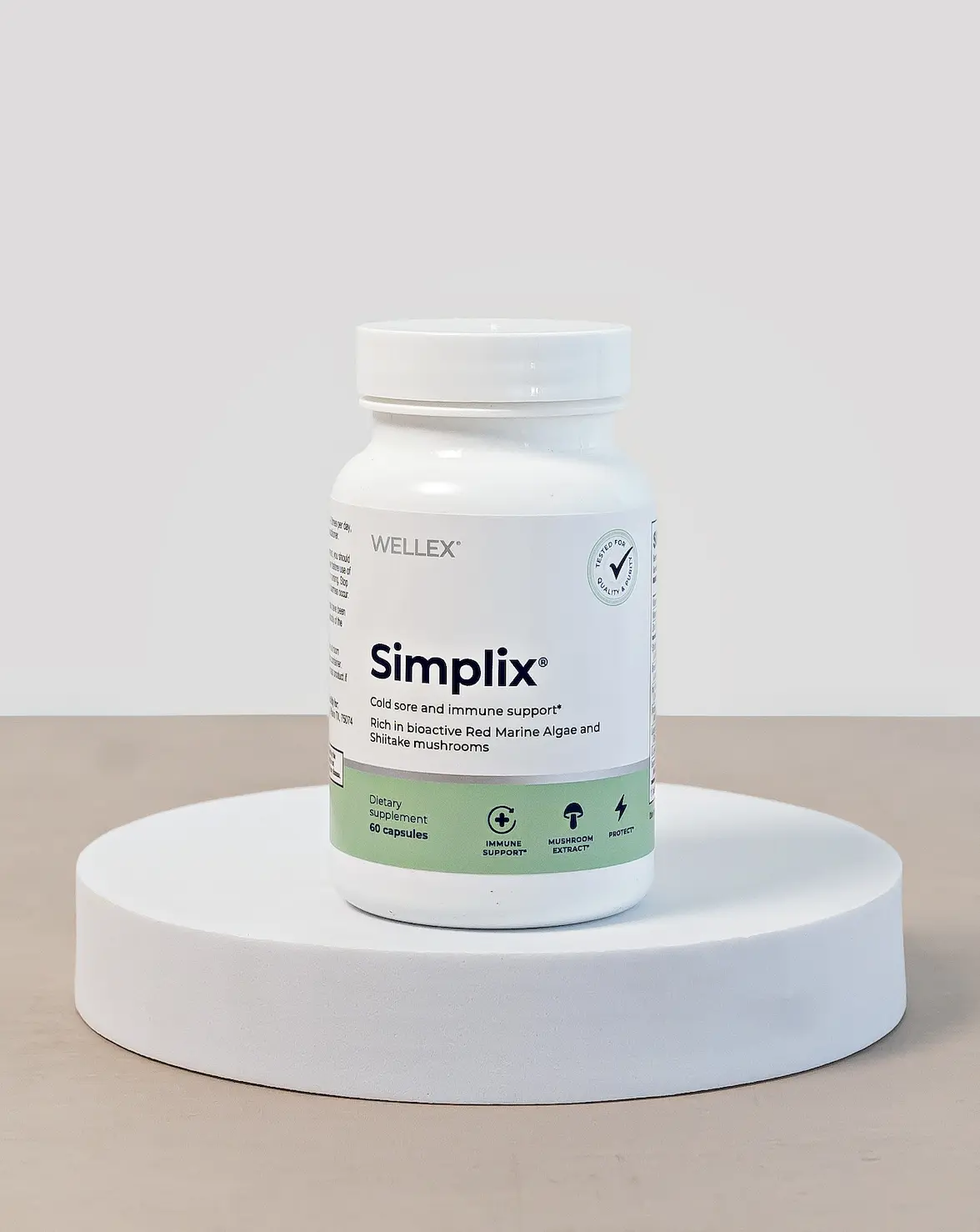
Simplix Viral Defense
Cold Sore & HSV Support
Synergistic formula combining L-Lysine, shiitake mushroom, and marine bioactives for comprehensive immune support.
SHOP NOW & SAVE 15%HSV-1 shows up in the brain regions Alzheimer's damages
Studies of donated brain tissue have found HSV-1 DNA in the brain regions most damaged by Alzheimer's, especially those involved in memory. Researcher Ruth Itzhaki at the University of Manchester first reported this in the 1990s, and found the risk was highest in people who also carry the APOE ε4 gene variant.
In lab models, including neuron cultures and 3D "mini-brain" organoids, HSV-1 infection triggers production of amyloid-beta and tau, the two proteins that build up in Alzheimer's brains.
A 2025 study in Cell Reports suggested tau may first act as a defense against HSV-1 inside neurons. Over time, that defense may tip into the tangles that damage brain cells.
Amyloid-beta also has antimicrobial properties. One theory is that plaques form partly as the brain's attempt to trap the virus.
Health-record studies link herpes to higher dementia risk
HSV-1 infects about two-thirds of people under 50 worldwide. It stays dormant in nerve cells and can reactivate under stress, illness or a weaker immune system. Some researchers think repeated reactivation reaching the brain causes slow, chronic inflammation.
A 2025 study of more than 340,000 US patients found that people with a recorded HSV-1 diagnosis had about an 80% higher risk of Alzheimer's than matched controls. Among people with HSV, those treated with antivirals such as acyclovir or valacyclovir had a 17% lower risk.
A Taiwanese nationwide study found people over 50 with HSV had about 2.6 times the dementia risk, and that antiviral treatment was associated with a much lower risk.
These studies show association, not cause. People who are diagnosed and treated for herpes may differ from others in health habits, access to care and many other ways that also affect dementia risk.
The VALAD trial found valacyclovir did not help
VALAD, led by Dr. D.P. Devanand at Columbia University, was a randomized, placebo-controlled trial in people with early symptomatic Alzheimer's or mild cognitive impairment who tested positive for HSV-1 or HSV-2 antibodies. Participants took high-dose valacyclovir or placebo for 78 weeks.
At 78 weeks, the valacyclovir group had worsened more on the main cognitive test (ADAS-Cog11) than the placebo group. Daily-function scores, amyloid and tau PET scans, and MRI measures of brain shrinkage showed no difference between the groups.
The drug did reach the brain. Acyclovir was measured in spinal fluid during the trial, so the result is not explained by poor penetration.
The authors concluded that valacyclovir should not be used to treat early Alzheimer's in people with herpes, and that HSV's role in causing the disease "needs re-consideration."
The results don't settle the question
The trial tested treatment after symptoms had started. By then, brain damage may be too advanced for an antiviral to make a difference, even if the virus helped start the process decades earlier.
The population studies mostly describe people who took antivirals years before any memory problems. That is a different question from VALAD's, and only a prevention trial in healthy, middle-aged people could answer it. No such trial is underway as far as we know.
Researchers are also looking beyond acyclovir-type drugs. ALT001, a candidate developed in Korea, restored the function of microglia (the brain's immune cells) and reduced inflammation in HSV-1 infected mice. It has not been tested in people.
The shingles vaccine adds a related clue
Shingles is caused by varicella-zoster virus, a member of the herpes family. A 2025 study in Nature used a natural experiment in Wales, where eligibility for the shingles vaccine depended on exact date of birth. People who just qualified were about 20% less likely to be diagnosed with dementia over the next seven years than people who just missed out.
That design is much closer to a randomized trial than typical health-record studies. It suggests that controlling herpes-family viruses may protect the brain, even if valacyclovir didn't help once Alzheimer's had begun.
If you are over 50, the shingles vaccine (Shingrix) is recommended in the US and many other countries for its main purpose anyway. Ask your doctor whether you are eligible.
Alzheimer's has many causes, and herpes is at most one
Alzheimer's disease is the most common cause of dementia, and age and genetics remain the biggest risk factors. Carrying APOE ε4 raises risk on its own and may make the brain more vulnerable to HSV-1.
Known modifiable risk factors include high blood pressure, diabetes, smoking, physical inactivity, hearing loss, social isolation and heavy drinking. These have stronger evidence than anything related to herpes.
Having cold sores does not mean you will get Alzheimer's. Most people with HSV-1 never develop dementia.
What this means if you have cold sores
There is no evidence-based reason to start antivirals to protect your memory. If you have frequent or severe outbreaks, suppressive therapy is still worth discussing with your doctor for the usual reasons: fewer outbreaks, less pain and lower transmission risk.
Keeping outbreaks rare with good sleep, stress management and a diet that supports your immune system costs nothing and is good for your brain as well. Our guide to cold sore triggers covers the common ones.
We will update this page as new trials report.
Herpes and Alzheimer's FAQs
Does herpes cause Alzheimer's disease?
It is not proven. HSV-1 is found in Alzheimer's-affected brain regions and is linked to higher dementia risk in large studies, but the first major antiviral trial (VALAD, 2025) did not show any benefit.
Should I take valacyclovir to prevent dementia?
No. No trial has shown that antivirals prevent dementia, and VALAD found valacyclovir did not help people who already had early Alzheimer's.
Do cold sores increase my risk of Alzheimer's?
Studies link HSV-1 infection to a modestly higher risk, but most people with cold sores never develop dementia. Age, genetics and cardiovascular health matter far more.
Does the shingles vaccine reduce dementia risk?
A 2025 natural experiment in Wales found about 20% fewer dementia diagnoses among people who got the shingles vaccine. It is strong evidence but not yet confirmed by a randomized trial.

Image: Bravado Labs L-Lysine Cold Sore Treatment
Bravado Labs L-Lysine Cold Sore Treatment
Why we love it:
- Verified Customer Favorite
- High Quality Ingredients
As an affiliate, we earn from qualifying purchases.