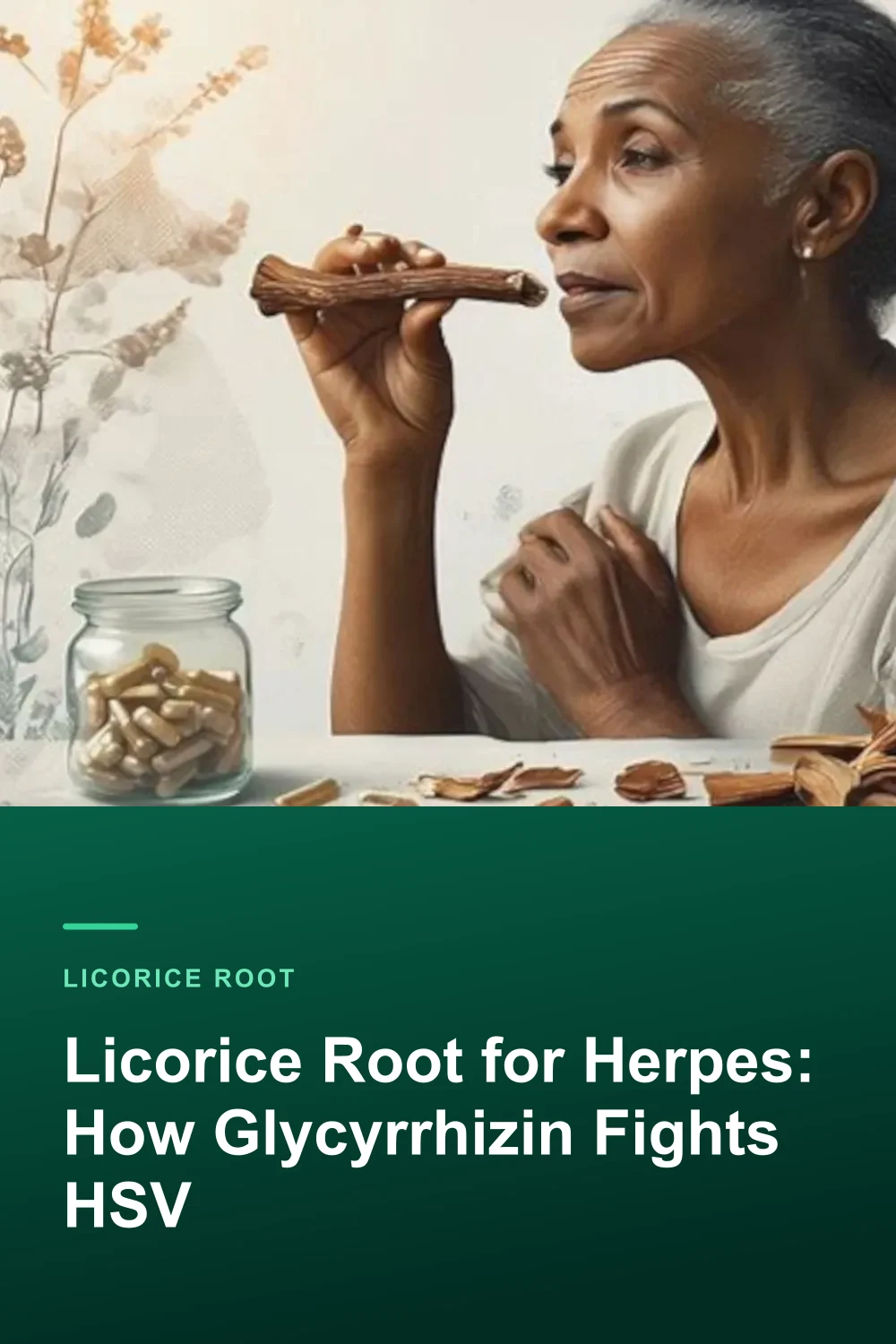
Licorice root (Glycyrrhiza glabra) has been used medicinally for thousands of years across ancient Egypt, traditional Chinese medicine, and Ayurvedic practice. Only in recent decades has modern research begun to explain precisely why it works against viral infections, including herpes simplex virus.
The primary bioactive compound responsible for its antiviral effects is glycyrrhizin, a triterpenoid saponin that can make up 2-25% of licorice root by dry weight. Glycyrrhizin has demonstrated measurable activity against both HSV-1 and HSV-2 in laboratory and animal studies, suppressing viral replication, reducing lesion severity, and modulating the immune response in ways directly relevant to cold sore management.
This article covers how glycyrrhizin works, what the research shows, and how licorice root fits into a modern cold sore supplement protocol.
Simplix Viral Defense
Cold Sore & HSV Support
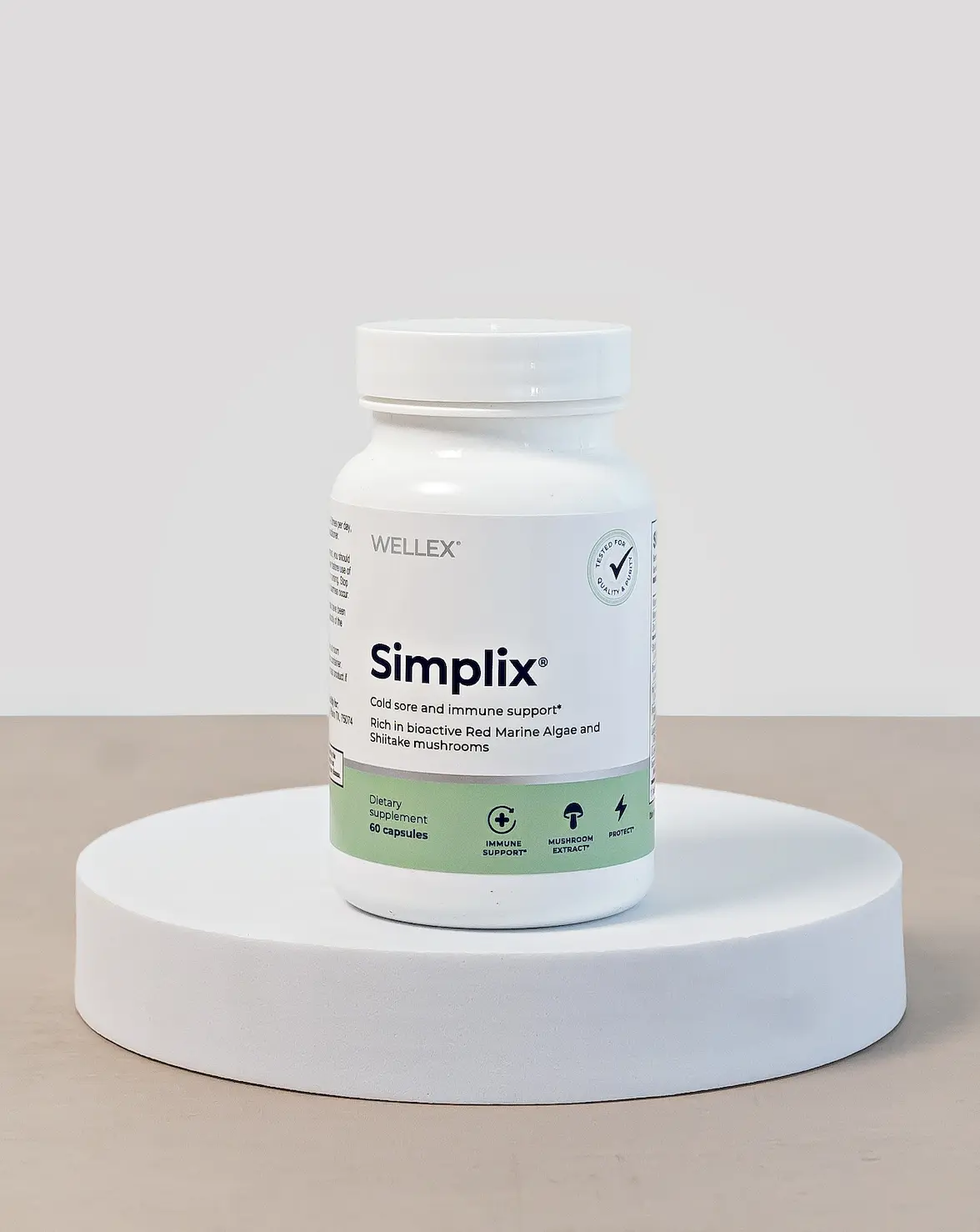
Simplix Viral Defense
Cold Sore & HSV Support
Synergistic formula combining L-Lysine, shiitake mushroom, and marine bioactives for comprehensive immune support.
SHOP NOW & SAVE 15%What Is Glycyrrhizin and Why Does It Matter?
Glycyrrhizin (also called glycyrrhizic acid) is concentrated in the root of Glycyrrhiza glabra and is responsible for licorice's characteristic sweet taste. High-quality licorice root extracts are standardized to their glycyrrhizinic acid content to ensure consistent, clinically relevant doses.
In the body, glycyrrhizin is metabolized to glycyrrhetinic acid, a compound with its own anti-inflammatory and antiviral properties. Together, these compounds work through multiple biological pathways: inhibiting viral replication, modulating cytokine production, reducing inflammation at outbreak sites, and supporting immune cell function. This multi-pathway activity makes licorice root a more versatile antiviral than most single-mechanism compounds.
How Licorice Root Works Against Herpes Simplex Virus
Modern research has documented several mechanisms through which glycyrrhizin exerts antiviral effects against HSV.
In animal studies, glycyrrhizin showed approximately 2.5 times increased survival rates and reduced HSV-1 replication in the brain compared to untreated controls. This is compelling evidence for its antiviral efficacy in a living biological system where immune responses, inflammation, and viral pathology interact as they do in humans.
At the cellular level, glycyrrhizin inhibits viral uptake into cells, disrupts viral replication after cell entry, and interferes with viral protein synthesis. Its anti-inflammatory properties are also relevant: the inflammatory cytokine cascade that accompanies HSV outbreaks can worsen symptoms and create conditions favorable for continued spread. Glycyrrhizin suppresses these signals, which research suggests reduces outbreak severity and duration.

Licorice Root as an Immunomodulator for Recurring Outbreaks
Beyond direct antiviral action, licorice root functions as an immunomodulator, regulating and calibrating immune activity rather than simply stimulating it. Research shows that glycyrrhiza compounds enhance CD4+ and CD8+ T lymphocyte activity, improve cytokine balance, and promote a targeted immune response to viral pathogens.
This distinction matters for long-term cold sore management. Frequent outbreaks are typically associated with an immune system that is not effectively suppressing latent HSV between episodes. By supporting the immune system's ability to do that job, regular licorice root supplementation may reduce outbreak frequency over time, not just provide acute relief during active episodes.
Studies combining licorice root with other immunomodulating herbs like Echinacea and Astragalus show enhanced CD69 expression and immune cell activation, suggesting its effects are amplified in a synergistic multi-herb formula consistent with how it performs in a comprehensive cold sore supplement.
Using Licorice Root for Cold Sore Prevention and Treatment
Licorice root can be incorporated into a cold sore management strategy both topically and orally. Topical preparations (creams or gels containing licorice root extract) applied directly to active lesions reduce inflammation and support faster healing. Oral supplementation supports the immune response and is relevant for both daily prevention and active outbreaks.
For most people, the practical approach is to take licorice root as part of a multi-ingredient formula designed for HSV immune support, rather than as a standalone herb. Its anti-inflammatory and immunomodulatory properties work best alongside complementary mechanisms: L-Lysine's competition with arginine, zinc's direct antiviral activity, and seaweed-derived sulfated polysaccharides that block viral adsorption.
Wellex Simplix contains 190mg of Licorice Root extract standardized to 16% Glycyrrhizinic acids per serving, one of the highest standardized concentrations in a commercial HSV supplement. Use code PROMEO15 for 15% off. It combines this with L-Lysine, Andrographis, Brown Kombu Seaweed (Fucoidan), Irish Moss, Lemon Balm, Shiitake Mushroom, Zinc, Vitamin C, and Vitamin B12 for comprehensive HSV immune support.
Safety Considerations for Long-Term Use
Licorice root is well tolerated at standard supplement doses, but one safety consideration is worth understanding: high doses of glycyrrhizin over extended periods can cause pseudoaldosteronism: elevated blood pressure, fluid retention, and potassium depletion. This effect is primarily associated with consuming very large quantities of whole licorice root or high-dose isolated glycyrrhizin extracts over long periods.
Standard doses used in multi-ingredient formulas are within normal safety ranges for healthy adults. However, individuals with hypertension, kidney disease, or those taking corticosteroid therapy should consult a healthcare provider before sustained licorice root supplementation. Licorice root is also not recommended during pregnancy.
Licorice Root and Herpes FAQs
Does licorice root help with cold sores?
Research supports licorice root's antiviral and anti-inflammatory activity against HSV-1 and HSV-2. Its active compound glycyrrhizin inhibits viral replication at multiple stages, reduces outbreak-associated inflammation, and modulates immune function. While it is not a pharmaceutical antiviral, evidence for its efficacy is among the strongest of any herbal cold sore remedy.
What is the active compound in licorice root for herpes?
The primary active compound is glycyrrhizin (also called glycyrrhizinic acid). High-quality licorice root extracts are standardized to their glycyrrhizinic acid percentage to ensure a consistent and clinically relevant dose. Look for this standardization when choosing a licorice root supplement.
How does licorice root compare to antiviral medications for herpes?
Licorice root is not a direct replacement for pharmaceutical antivirals like acyclovir or valacyclovir, which are more clinically validated for severe or frequent outbreaks. It works through different mechanisms and is best used as complementary support. Its multi-pathway activity and immunomodulatory properties offer benefits that pharmaceuticals do not, particularly for long-term suppression support.
Can I apply licorice root topically to a cold sore?
Yes. Topical creams and gels containing licorice root extract can reduce inflammation and support faster surface healing of active cold sore lesions. Topical application avoids systemic exposure entirely and is well tolerated for most people.
Is licorice root safe to take daily for cold sore prevention?
At standard supplement doses, licorice root is generally safe for daily use in healthy adults. Very high doses over extended periods can cause elevated blood pressure and potassium depletion. Individuals with hypertension, kidney conditions, or those on corticosteroid medications should consult a healthcare provider before long-term use.
Why is licorice root more effective in a multi-ingredient formula?
Licorice root's anti-inflammatory and immunomodulatory effects work synergistically with direct antiviral compounds like lysine, zinc, and fucoidan. A formula that addresses viral replication, immune cell activation, inflammation, and viral adsorption simultaneously is more comprehensive than any single ingredient in isolation.

Image: Bravado Labs L-Lysine Cold Sore Treatment
Bravado Labs L-Lysine Cold Sore Treatment
Why we love it:
- Verified Customer Favorite
- High Quality Ingredients
As an affiliate, we earn from qualifying purchases.