Kissing is a primary mode of transmission for oral herpes, caused mainly by herpes simplex virus type 1 (HSV-1). HSV-1 infects the mucous membranes and skin around the mouth, leading to cold sores—painful, fluid-filled blisters that typically appear on or near the lips.
The virus remains latent in nerve cells and can reactivate periodically, causing recurrent outbreaks.
Transmission occurs through direct contact with infected saliva or lesions during kissing, especially when cold sores are active.
However, HSV-1 can also be shed asymptomatically, meaning the virus can be present and contagious even without visible sores.
Understanding the mechanisms of HSV-1 transmission through kissing is crucial for preventing spread and managing cold sore outbreaks effectively.
HSV-1 and HSV-2 Transmission Dynamics Through Kissing
HSV-1 is the predominant cause of oral herpes and is efficiently transmitted through kissing due to close contact with saliva and infected oral tissues. The virus enters the body via mucous membranes or small breaks in the skin, establishing latency in the trigeminal ganglion.
Reactivation leads to cold sore outbreaks.
While HSV-1 is the main culprit in oral infections, HSV-2—typically associated with genital herpes—can also infect the oral region through oral-genital contact, though this is less common.
Conversely, HSV-1 can cause genital herpes via oral sex.
Both HSV-1 and HSV-2 can be transmitted through kissing, but HSV-1 transmission is far more frequent in this context.
Importantly, viral shedding can occur even when no sores are visible, enabling transmission during asymptomatic periods.
Kissing can precipitate cold sore outbreaks even if no active lesions are present at the time. Vigorous or prolonged kissing, especially involving lip biting or friction, can cause microtrauma to the delicate skin of the lips.
These minor injuries disrupt the skin barrier, potentially triggering HSV-1 reactivation from latency.
Such mechanical stress, combined with other factors like immune suppression, UV exposure, or stress, can create an environment conducive to viral replication and lesion formation.
This explains why some individuals experience outbreaks shortly after intense kissing sessions.
Therefore, even in the absence of visible cold sores, kissing can indirectly contribute to outbreak initiation by causing local irritation and skin damage.

Guidelines for Kissing During an Active Cold Sore Outbreak
Kissing should be strictly avoided during an active cold sore outbreak due to the high risk of HSV-1 transmission. Active lesions shed large quantities of infectious virus, making direct contact highly contagious.
The virus can be transmitted through contact with the sore itself or with contaminated saliva.
Engaging in kissing or oral contact during this period not only risks infecting others but can also exacerbate the lesion through repeated trauma and irritation.
It is recommended to abstain from kissing until the cold sore has fully healed—meaning the lesion has crusted over, the scab has fallen off, and the skin is intact without cracks or redness.
This healing phase typically spans 7 to 14 days.
During outbreaks, individuals should also avoid touching the sore and practice rigorous hand hygiene to prevent autoinoculation (spreading the virus to other body parts) or transmission to others.
How Long to Wait Before Kissing After a Cold Sore
After a cold sore outbreak, it is essential to wait until the lesion has completely healed before resuming kissing. This means the sore should have fully crusted, the scab should have naturally fallen off, and the underlying skin must be intact without redness, cracks, or tenderness.
Typically, this healing process takes between 7 to 14 days, but it can vary depending on individual factors and treatment.
To accelerate healing and reduce the duration of contagiousness, antiviral medications such as acyclovir, valacyclovir, or famciclovir can be used.
These drugs are most effective when started at the earliest signs of an outbreak (tingling or itching).
Additional supportive measures include keeping the affected area clean, avoiding irritants, maintaining good hydration, managing stress, and using topical treatments recommended by healthcare providers.
How to Prevent Cold Sore Transmission When Kissing
Preventing HSV-1 transmission during kissing requires a combination of behavioral and medical strategies. The most effective method is to avoid kissing when cold sores or prodromal symptoms (tingling, burning) are present.
Using daily suppressive antiviral therapy can significantly reduce asymptomatic viral shedding and lower transmission risk.
Additionally, maintaining open communication with partners about herpes status and symptoms fosters mutual understanding and safer intimacy.
Good hygiene practices, such as washing hands after touching sores and not sharing personal items like lip balm or utensils, further reduce indirect transmission risks.
Asymptomatic viral shedding refers to the release of HSV-1 virus particles from the skin or mucosa without visible symptoms or sores. This phenomenon means that individuals can transmit the virus through kissing even when they feel completely well and show no signs of an outbreak.
Although the viral load during asymptomatic shedding is generally lower than during active outbreaks, it still poses a real risk of transmission.
This underscores the importance of cautious behavior and, when appropriate, medical interventions to reduce shedding.
Understanding asymptomatic shedding helps explain why herpes is so widespread and why transmission can occur despite precautions.
Living with herpes and managing the risks associated with kissing can have psychological and social impacts. Fear of transmitting the virus or being stigmatized may cause anxiety, affect self-esteem, and complicate intimate relationships.
Education about HSV, its transmission, and effective management reduces stigma and empowers individuals to maintain healthy relationships.
Open communication with partners about herpes status and preventive measures fosters trust and emotional intimacy.
Support groups and counseling can also provide valuable resources for coping with the emotional aspects of living with herpes.
Herpes simplex virus infection does not preclude fulfilling romantic and intimate relationships. With proper knowledge, precautions, and treatment, individuals with HSV-1 can safely enjoy kissing and intimacy.
Key to this is honest communication with partners, adherence to treatment plans, and awareness of outbreak triggers to minimize transmission risk.
Many couples successfully navigate herpes together, emphasizing that the virus is just one aspect of their relationship and does not define their connection or affection.

Frequently Asked Questions About Kissing and Cold Sores
Can you get cold sores from kissing?
Yes. Cold sores are caused by herpes simplex virus type 1 (HSV-1), which spreads primarily through direct skin-to-skin contact such as kissing, especially when sores are active or during asymptomatic viral shedding.
Can HSV-2 be transmitted through kissing?
While HSV-2 typically causes genital herpes, it can infect the oral area through oral-genital contact. However, HSV-2 transmission through kissing alone is rare compared to HSV-1.
Can kissing trigger a cold sore outbreak even if there is no visible sore?
Yes. Intense kissing, especially involving lip biting or friction, can cause minor skin trauma that may trigger HSV reactivation and cold sore outbreaks.
How long should I wait to kiss someone after a cold sore heals?
Wait until the cold sore has fully healed—meaning the scab has fallen off and the skin is intact without redness or cracks—usually 7 to 14 days after onset, to minimize transmission risk.
Can antiviral medications help reduce the risk of transmitting cold sores during kissing?
Yes. Antiviral medications can shorten outbreak duration, reduce viral shedding, and lower the chance of transmitting HSV to partners.
Is it possible to transmit HSV-1 even when no cold sores are visible?
Yes. Asymptomatic viral shedding allows HSV-1 to be present on the skin or in saliva without symptoms, making transmission possible even without visible sores.
What precautions should I take to avoid spreading cold sores through kissing?
Avoid kissing during active outbreaks or when experiencing prodromal symptoms, maintain good hygiene, avoid sharing lip products, and communicate openly with partners about herpes status.
Can cold sores be prevented entirely?
While HSV-1 infection cannot be cured, outbreaks can be managed and minimized through antiviral therapy, lifestyle adjustments, and avoiding known triggers.
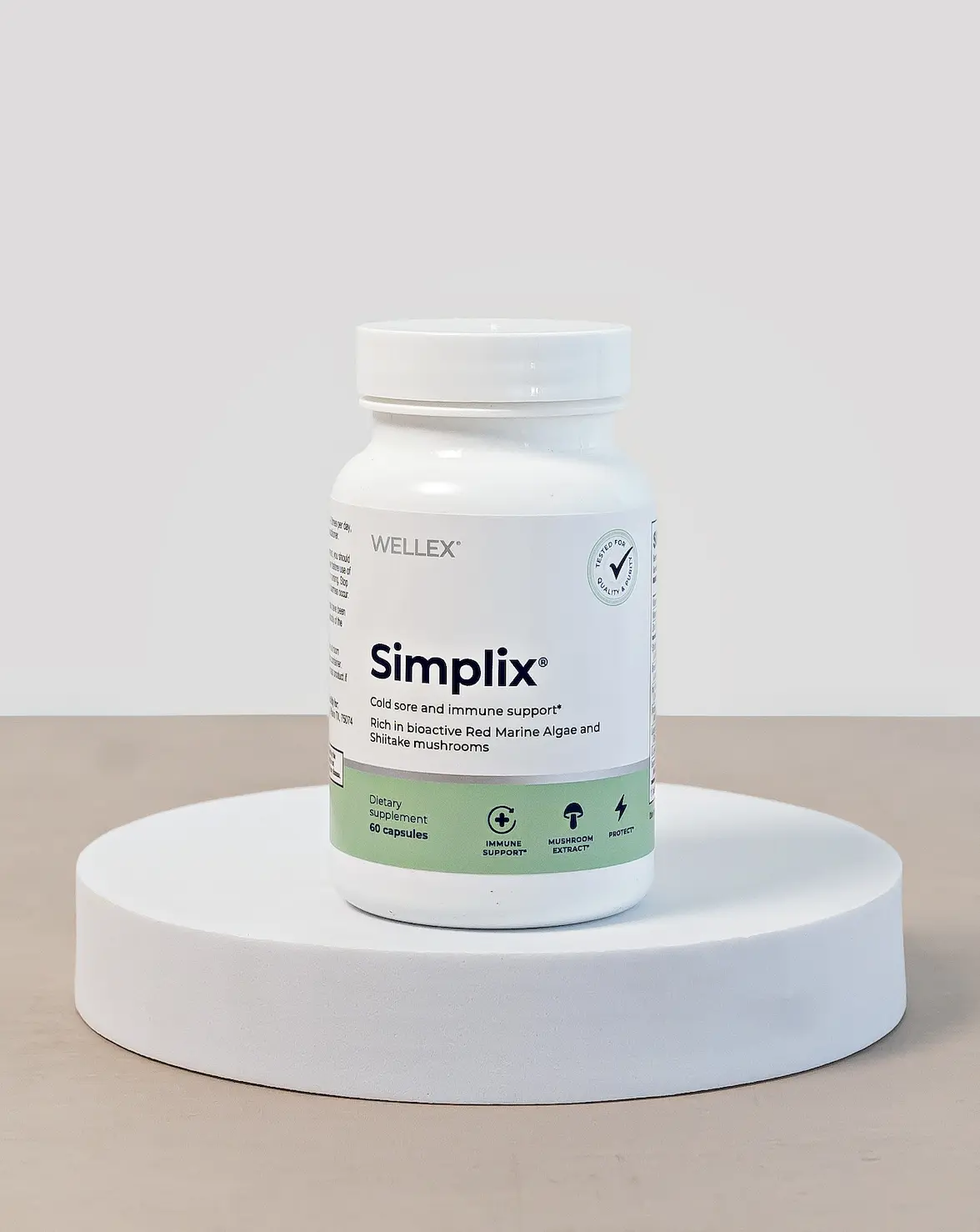
Image: Simplix Viral Defense
Simplix Viral Defense
Why we love it:
- Specifically formulated to reduce cold sore outbreaks
- Contains L-Lysine, Red Marine Algae, and Lemon Balm
- Supports immune system during viral challenges
- Helps manage stress-triggered outbreaks
Recommended Supplements for Herpes Management
Simplix Viral Defense
Cold Sore & HSV Support
Simplix Viral Defense
Cold Sore & HSV Support
Synergistic formula combining L-Lysine, shiitake mushroom, and marine bioactives for comprehensive immune support.
SHOP NOW & SAVE 15%