Editorial note: This tracker is no longer updated. For the current status of every vaccine candidate, see our 2027 herpes vaccine tracker.
There is no approved herpes vaccine in 2026, and none will reach the public this year or next. The field got smaller over the past two years. GSK dropped its candidate in 2024, and Moderna stopped its mRNA vaccine in November 2025 despite early data showing it was safe and triggered immune responses.
That leaves BioNTech's BNT163 as the only herpes vaccine in clinical trials at a large drug company. A handful of smaller programs, mostly live-attenuated vaccines, are trying to reach their first human trials.
The more immediate progress is in drugs rather than vaccines. A new antiviral, pritelivir, is awaiting an FDA decision in late 2026, and Gilead plans to start a Phase 2 trial of a once-weekly herpes pill by the end of the year.
Below is the status of each candidate as of October 2026, based on company announcements, trial registries and published data.
Simplix Viral Defense
Cold Sore & HSV Support
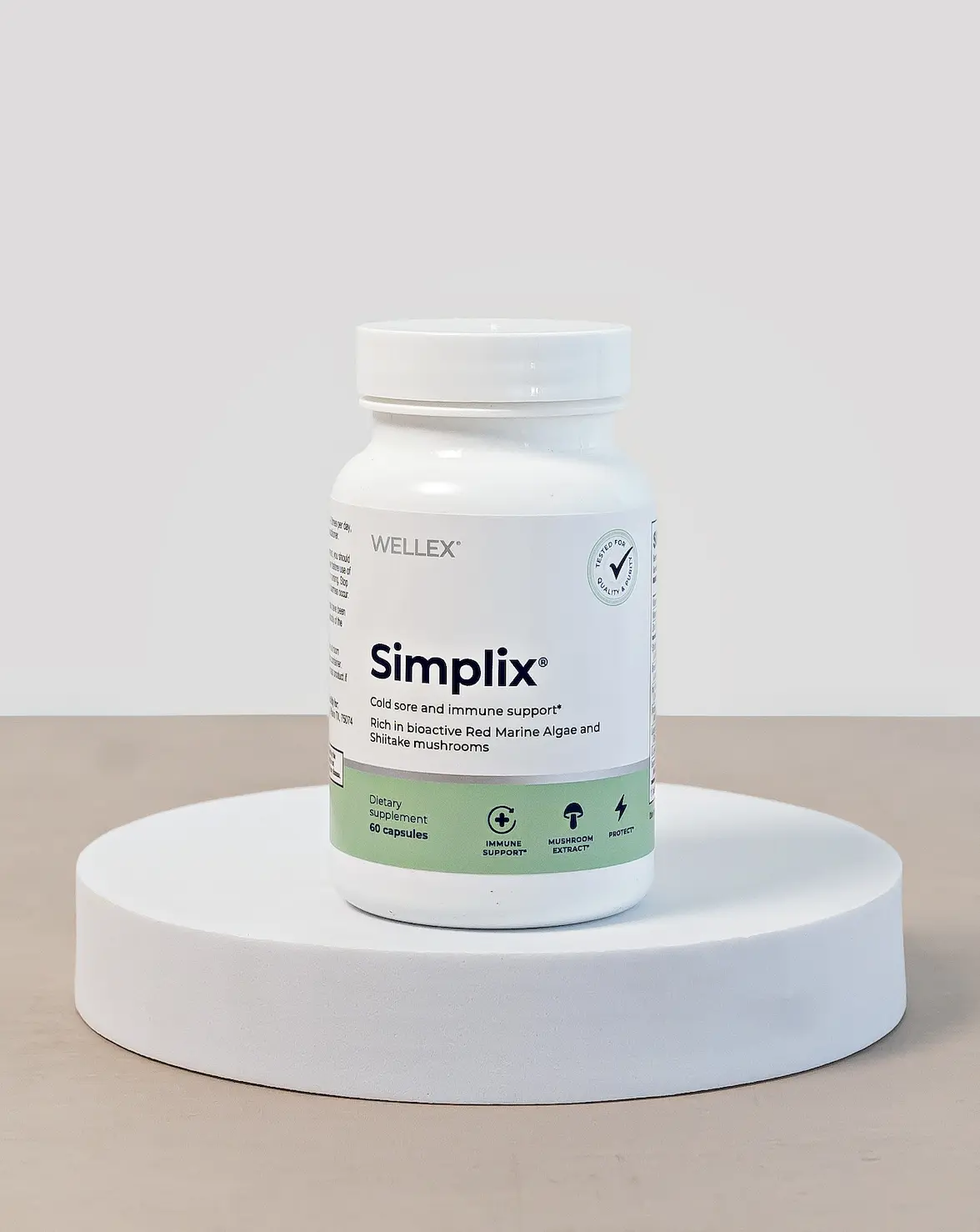
Simplix Viral Defense
Cold Sore & HSV Support
Synergistic formula combining L-Lysine, shiitake mushroom, and marine bioactives for comprehensive immune support.
SHOP NOW & SAVE 15%BioNTech's BNT163 is the last big-pharma herpes vaccine in trials
BNT163 is an mRNA vaccine designed to prevent genital herpes (HSV-2) in people who have never been infected. It was developed with the University of Pennsylvania, building on years of work by Dr. Harvey Friedman's lab.
How BNT163 works
The vaccine encodes three HSV-2 surface proteins:
- gD, which the virus uses to enter cells
- gC, which helps the virus attach and blocks part of the immune response called complement
- gE, which the virus uses to disable antibodies
Older vaccines targeted gD alone and failed. The idea behind BNT163 is that blocking the virus's immune-evasion proteins as well as its entry protein gives antibodies a better chance to work. In animal studies the trivalent vaccine gave strong protection against genital infection.
What the trial has shown so far
The Phase 1 trial (NCT05432583) started in December 2022 and enrolled roughly 300 participants, including healthy volunteers and people with a history of recurrent genital herpes. Results presented at IDWeek in October 2025 and published in 2026 showed that BNT163 was well tolerated with an acceptable safety profile and produced binding and neutralizing antibodies against HSV-2.
The trial is scheduled to finish in October 2026. Phase 1 does not test whether a vaccine prevents infection. That needs a much larger efficacy trial, and BioNTech has not yet announced one.
Realistic timeline
If BioNTech moves forward, a Phase 2 or combined Phase 2/3 efficacy trial would likely take three to five years, since researchers need to wait for enough new infections among participants to compare groups. A prevention vaccine reaching the market before 2030 is unlikely.
Moderna stopped mRNA-1608 despite encouraging early data
mRNA-1608 was Moderna's therapeutic vaccine, meant to reduce outbreaks in people who already have HSV-2. Its Phase 1/2 trial (NCT06033261) enrolled about 300 adults with recurrent genital herpes and finished in April 2025.
Interim results, later published in Open Forum Infectious Diseases, showed:
- no major safety concerns, with most side effects mild or moderate
- increased binding and neutralizing antibodies against HSV-2 in every vaccine group
- exploratory trends toward a longer time to the next outbreak and fewer recurrences
On November 20, 2025, Moderna announced it would not take mRNA-1608 into Phase 3. The company framed it as part of a wider cut to research spending rather than a safety or efficacy failure.
For people with herpes, this was a real loss. The data suggested the vaccine might help, but without a Phase 3 trial it will not reach patients unless another company or funder picks it up. No buyer or partner has been announced.
GSK's vaccine failed because antibodies alone weren't enough
GSK's candidate, GSK3943104, was also a therapeutic vaccine for people with recurrent genital herpes. It used purified viral proteins with an adjuvant, the same approach behind GSK's highly successful shingles vaccine, Shingrix.
In September 2024, GSK announced that the Phase 2 part of its trial did not meet its efficacy objective and ended the program. The vaccine produced antibodies but did not reduce recurrences enough.
Many researchers see this as more evidence that controlling a virus that hides in nerve cells needs strong T-cell responses, especially tissue-resident T-cells in the genital skin, not just circulating antibodies. Protein-only vaccines are generally weaker at producing those T-cells than mRNA or live-attenuated vaccines.
Earlier protein vaccines failed for similar reasons. GSK's Herpevac (gD2) did not protect women against HSV-2 in a 2012 trial, and Genocea's GEN-003 was shelved in 2017 for commercial reasons despite modest benefits.
Live-attenuated vaccines are trying to reach human trials
Live-attenuated vaccines use a weakened version of the herpes virus that can't cause disease. They expose the immune system to dozens of viral proteins instead of two or three, which tends to produce broader T-cell and mucosal immunity.
Rational Vaccines' RVx201
RVx201 is a live HSV-2 strain with a key gene (ICP0) disabled so it can't reactivate normally. It is based on research by Dr. William Halford, who died in 2017.
In February 2026, Rational Vaccines began collecting interest from volunteers for a planned Phase 1 trial in the UK. As of this update, the trial has not been confirmed as enrolling. The main regulatory hurdle for any live herpes vaccine is showing that the weakened strain can't revert or cause harm in people with weak immune systems.
ΔgD-2 and other preclinical candidates
HSV-2 ΔgD-2, a strain missing the gD gene, gave strong protection in animal studies, including a 2025 head-to-head comparison of three vaccine strains. Its developer, X-Vax Technology, ceased operations in late 2023, and the candidate's clinical future is unclear.
Researchers including Dr. Kening Wang at the NIH are also testing other weakened strains, such as HSV-2 gD27, in animals. None are in human trials.
New antivirals will arrive years before any vaccine
These are drugs rather than vaccines, but for most readers they matter more in the near term.
Pritelivir: FDA decision expected in late 2026
Pritelivir, from Germany's AiCuris, is a helicase-primase inhibitor. It blocks a different viral enzyme from acyclovir and valacyclovir, so it works against resistant strains. In its key Phase 3 trial in immunocompromised patients with infections that weren't healing, 82.4% of patients on pritelivir achieved complete healing, versus 42.0% on other treatments.
The FDA granted Priority Review in April 2026, with a decision expected in the fourth quarter of 2026. If approved, it will be the first new herpes drug in more than 20 years, but initially only for this narrow group. Read more in our pritelivir guide.
Gilead's once-weekly pill: Phase 2 by end of 2026
Assembly Biosciences developed two long-acting helicase-primase inhibitors, ABI-5366 and ABI-1179. In small 29-day Phase 1b trials in people with recurrent genital herpes, once-weekly doses cut viral shedding by 94% to 98% compared with placebo. For comparison, daily valacyclovir typically reduces shedding by about 70%.
Gilead licensed both drugs in December 2025. In August 2026 it chose GS-1179 (formerly ABI-1179) to advance, with a Phase 2 trial expected to start by the end of 2026. Approval is unlikely before about 2030. Details are in our weekly herpes pill update.
Gene editing is still waiting for its first genital herpes trial
Vaccines and antivirals control the virus. Gene editing aims to remove it from nerve cells, which would be a true cure.
Dr. Keith Jerome's team at Fred Hutchinson Cancer Center in Seattle uses engineered enzymes called meganucleases, delivered by a harmless virus, to cut up dormant herpes DNA. In mice, a single-vector version cleared 90% or more of latent HSV-1 with fewer side effects than earlier versions. The team has said it hopes to begin human trials around 2026 or 2027, but no trial has been registered.
In China, BDgene's BD111 uses CRISPR to target HSV-1 in the eye, where the virus causes a serious condition called herpetic stromal keratitis. A Phase 2a trial with 40 patients began in April 2025 and is due to complete in December 2026. Eye infections are a much easier target than nerve ganglia, so success there would not mean a genital herpes cure is close.
A "functional cure" is a more realistic near-term goal
Researchers increasingly talk about a functional cure rather than complete elimination of the virus. A functional cure would leave dormant viral DNA in the nerves but keep it so well controlled that a person:
- no longer gets symptomatic outbreaks
- sheds little or no virus
- has a very low chance of passing it to partners
A strong therapeutic vaccine, a long-acting antiviral, or a combination of both could achieve this. The Phase 1b shedding results for Gilead's weekly pills are the closest anything has come so far, although only over a few weeks.
WHO estimates that about 3.8 billion people under 50 have HSV-1 and around 520 million people aged 15 to 49 have HSV-2. Even partial protection would help millions.
What you can do while research continues
If you have genital herpes and frequent outbreaks, daily suppressive therapy with valacyclovir, acyclovir or famciclovir cuts outbreaks by 70% to 80% and roughly halves the risk of passing HSV-2 to a partner when combined with condoms. It is cheap, generic and well studied.
To join a trial, search ClinicalTrials.gov for "herpes simplex" and filter for "Recruiting." Therapeutic trials need people with confirmed HSV-2. Prevention trials need people who test negative.
Be wary of anyone selling a "herpes vaccine" or "cure" online. Nothing on this list is available outside a clinical trial or expanded access program run by a doctor.
We review this page every six months. For a broader overview of cure research, see our herpes cure research update.
Herpes Vaccine Candidates 2026 FAQs
Is a herpes vaccine available in 2026?
No. No herpes vaccine is approved anywhere. BioNTech's BNT163 is the most advanced active candidate and is still in Phase 1. A vaccine is unlikely to be available before about 2030.
What happened to Moderna's herpes vaccine?
Moderna announced in November 2025 that it would not move mRNA-1608 into Phase 3, as part of broader budget cuts. Early data showed it was safe and boosted antibodies, with hints of fewer outbreaks.
What happened to the GSK herpes vaccine?
GSK ended its therapeutic vaccine program in September 2024 after the Phase 2 trial did not meet its efficacy objective in people with recurrent genital herpes.
Will a herpes vaccine work for cold sores (HSV-1)?
Current candidates target HSV-2. Because HSV-1 and HSV-2 share many proteins, some cross-protection is possible, but no vaccine in human trials is designed specifically for cold sores.
What is the closest thing to a new herpes treatment?
Pritelivir, which has an FDA decision expected in late 2026 for drug-resistant herpes in immunocompromised patients. For the general population, Gilead's once-weekly GS-1179 is the most promising, but it is only entering Phase 2.
How can I join a herpes vaccine trial?
Search ClinicalTrials.gov for "herpes simplex vaccine" and filter by recruiting status and location. Rational Vaccines has also asked for UK volunteers for its planned RVx201 trial.

Image: Bravado Labs L-Lysine Cold Sore Treatment
Bravado Labs L-Lysine Cold Sore Treatment
Why we love it:
- Verified Customer Favorite
- High Quality Ingredients
As an affiliate, we earn from qualifying purchases.