Herpes simplex virus (HSV) is one of the most common infections in the world. Most people who carry it don't know, because the virus often causes mild symptoms or none at all.
This page collects the most reliable numbers on how many people have herpes, how it spreads, what it costs and how it affects newborns. They come from the World Health Organization (WHO), the US Centers for Disease Control and Prevention (CDC) and peer-reviewed studies.
A note on dates: global herpes estimates are produced every few years, not every year. The latest WHO figures, released in December 2024 and repeated in WHO's fact sheet updated in May 2025, describe the year 2020. They are still the most recent official estimates as of October 2026, so each figure below gives the year its data comes from.
Herpes at a glance:
- About 3.8 billion people under 50, or 64%, have HSV-1 (WHO, 2020 data).
- About 520 million people aged 15 to 49, or 13%, have HSV-2 (WHO, 2020 data).
- About 846 million people aged 15 to 49, more than 1 in 5, have genital herpes caused by either type (WHO, 2020 data).
- About 42 million people catch genital herpes each year, more than one every second (WHO, 2020 data).
- Genital herpes costs about $35 billion a year worldwide (2016 data).
- Neonatal herpes occurs in about 10 of every 100,000 births (WHO).
Simplix Viral Defense
Cold Sore & HSV Support
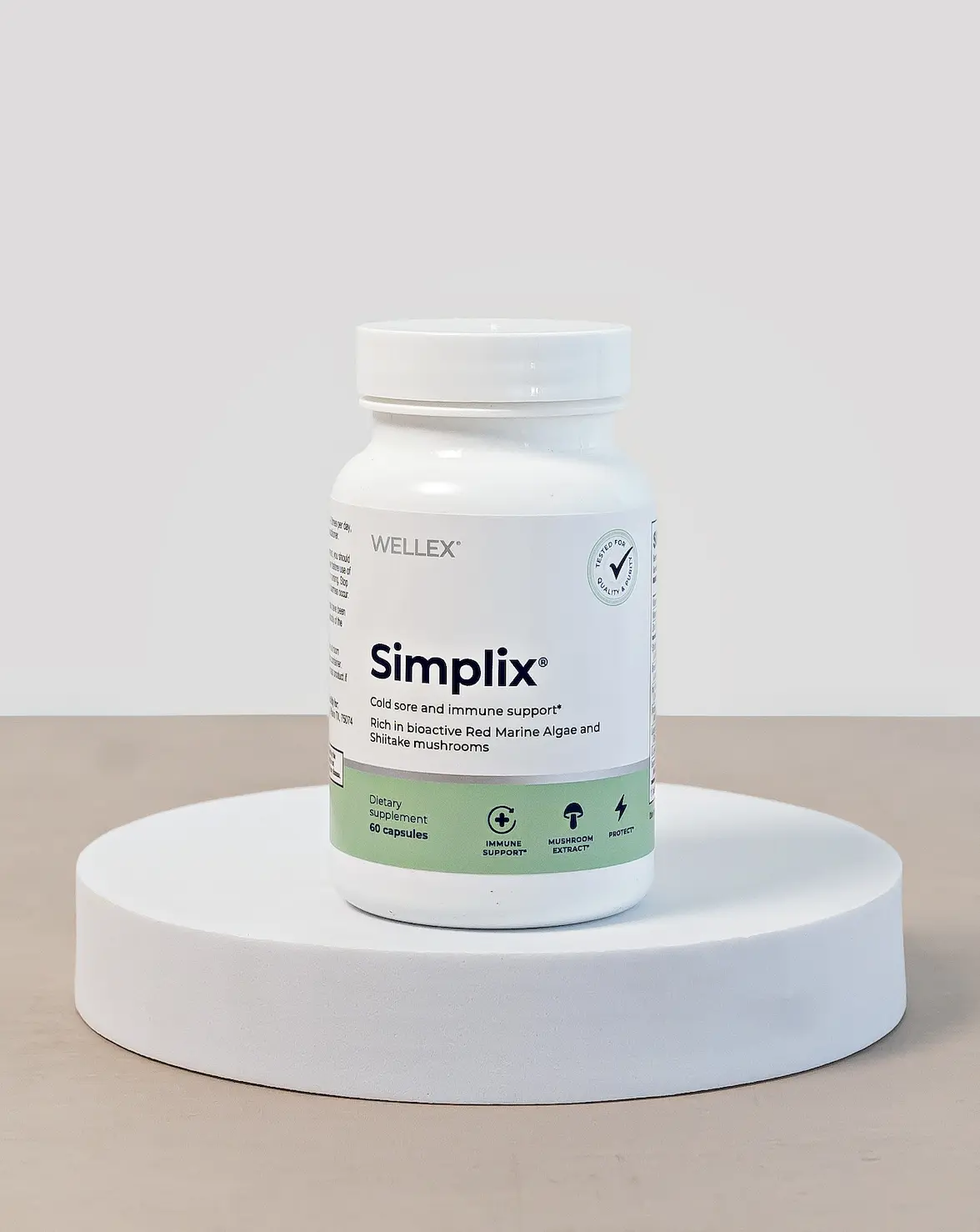
Simplix Viral Defense
Cold Sore & HSV Support
Synergistic formula combining L-Lysine, shiitake mushroom, and marine bioactives for comprehensive immune support.
SHOP NOW & SAVE 15%Two in three people under 50 carry HSV-1
WHO's estimates for 2020 show how widespread both viruses are:
| Infection | People infected | Share | Usual result |
|---|---|---|---|
| HSV-1 | 3.8 billion | 64% of people under 50 | Oral herpes (cold sores), sometimes genital herpes |
| HSV-2 | 520 million | 13% of people aged 15–49 | Genital herpes |
| Genital HSV-1 | 376 million | About 1 in 10 HSV-1 infections | Genital herpes, usually with few recurrences |
| Genital herpes, either type | 846 million | More than 1 in 5 people aged 15–49 | Genital herpes |
Most of these infections cause no noticeable symptoms. About 205 million people aged 15 to 49, or 5.3%, had at least one symptomatic episode of genital herpes in 2020. The rest either had no symptoms or symptoms too mild to recognize.
How people catch each type: HSV-1 is usually picked up in childhood through ordinary contact, such as a kiss from a relative with a cold sore. HSV-2 is almost always sexually transmitted, so it rises sharply after people become sexually active and keeps climbing with age.
Women are affected more than men. WHO notes that HSV-2 is more common in women because sexual transmission is more efficient from men to women. US data show the same pattern, with nearly twice as many genital HSV-2 infections in women as in men.
HSV-2 is becoming slightly more common again, according to a 2026 model
The newest peer-reviewed numbers come from a modeling study published in Communications Health in August 2026 by Houssein Ayoub, Manale Harfouche, Hiam Chemaitelly and Laith Abu-Raddad. It tracked HSV-2 worldwide from 1980 to 2025 and projected it to 2050. These are model estimates rather than WHO's official figures.
The study found that global HSV-2 prevalence among people aged 15 to 49 dipped from 13.5% in 1980 to 13.0% in 2005. It then rose to 13.6% in 2025 and is projected to reach 15.9% by 2050.
Because the world's population has also grown, the number of new infections has nearly doubled. The model puts new HSV-2 infections at 15.0 million in 1980 and 27.7 million in 2025, with 37.6 million a year projected by 2050.
The number of people having genital ulcers from HSV-2 rose from 95.0 million in 1980 to 179.0 million in 2025. The model projects 250.7 million by 2050.
The burden is very uneven. Estimated HSV-2 prevalence among people aged 15 to 49 in 2025, by WHO region:
| WHO region | HSV-2 prevalence, 2025 |
|---|---|
| Africa | 37.0% |
| Americas | 17.2% |
| Europe | 10.6% |
| Western Pacific | 8.6% |
| Eastern Mediterranean | 7.1% |
| South-East Asia | 6.5% |
The projections assume no vaccine and no major change in prevention. Our 2027 vaccine tracker covers how far vaccine research is from changing that, and our article on why herpes is on the rise looks at the trend in more detail.
About 1 in 8 Americans aged 14 to 49 has HSV-2
The CDC measures herpes through the National Health and Nutrition Examination Survey (NHANES), which tests blood samples from a representative group of Americans. Its most recent published estimates, from 2015–2016, found:
- HSV-1: 47.8% of people aged 14 to 49
- HSV-2: 11.9% of people aged 14 to 49
- both viruses were more common in women than in men, and both increased with age
Both have fallen since the start of the century. Age-adjusted HSV-1 prevalence dropped from 59.4% in 1999–2000 to 48.1% in 2015–2016, and HSV-2 dropped from 18.0% to 12.1%.
A separate CDC analysis estimated that in 2018 there were 18.6 million genital HSV-2 infections among Americans aged 15 to 49: 12.2 million in women and 6.4 million in men. It also estimated about 572,000 new genital HSV-2 infections each year.
In May 2026 the CDC released herpes test data from the August 2021 to August 2023 NHANES cycle. It has not yet published prevalence estimates from that data, which so far is open only to approved researchers. We will add the new figures when the CDC publishes them.
For a closer look at what these numbers mean for an individual, see herpes is more common than you think.
HSV-1 now causes a large share of new genital herpes
Genital herpes used to mean HSV-2. In high-income countries that is changing. HSV-1 now causes a large share of first genital herpes episodes, and in several studies of young adults it causes more than half.
Fewer children catch HSV-1. In the US, HSV-1 prevalence among 14- to 19-year-olds fell from 39.0% in 1999–2004 to 30.1% in 2005–2010. Without childhood exposure, more young adults have no antibodies to HSV-1 when they start having sex.
Oral sex can then pass HSV-1 from a partner's mouth to the genitals. A first genital HSV-1 infection in someone with no prior antibodies can be as painful as a first HSV-2 episode.
After that, genital HSV-1 is usually milder over time than genital HSV-2. A 2022 study in JAMA followed 82 people after their first genital HSV-1 episode. Recurrences were uncommon, about one on average in the first year.
The same study found the virus on 12.1% of days two months after infection, falling to 7.1% by 11 months. So the risk of passing genital HSV-1 to a partner is highest early on and drops during the first year.
Having HSV-1 does not prevent HSV-2, but a first HSV-2 outbreak tends to be milder in people who already carry HSV-1. Our article on whether HSV-1 protects against HSV-2 explains the evidence.

Most herpes transmission happens when there are no symptoms
Many people assume herpes spreads only during outbreaks. Sores do carry a lot of virus, but most transmission happens when the person with herpes has no visible sores. The virus reactivates, travels down the nerve and is released from the skin without causing an outbreak, a process called asymptomatic shedding.
How often shedding happens:
- Genital HSV-2: in studies using daily swabs, people with symptomatic HSV-2 shed virus on about 20% of days, and people who have never had symptoms on about 10%. Shedding becomes less frequent in the years after infection.
- Genital HSV-1: about 12% of days two months after infection, falling to about 7% at 11 months.
- Oral HSV-1: also sheds without symptoms, which is how most children catch it from family members.
In the best-known transmission study, published in 2004, couples in which one partner had HSV-2 were followed for eight months. When the infected partner took a placebo, 3.6% of uninfected partners caught HSV-2, even though all couples were counseled on safer sex. With daily valacyclovir, that fell to 1.9%, a reduction of about 48%.
Pooled studies show that consistent condom use lowers the risk by roughly 30% overall. Condoms protect women more than men, and no condom covers all the skin that can shed virus. Combining condoms, daily suppressive therapy and avoiding sex during outbreaks gives the most protection.
Shedding without symptoms also explains why many people with herpes cannot tell when or from whom they caught it. Our page on common herpes myths covers other misunderstandings about how it spreads.
Herpes costs the world about $35 billion a year and raises HIV risk
The most detailed estimate of the global cost of genital herpes was published in 2024 by a team including Sachin Silva and Houssein Ayoub. Using 2016 data, they put the yearly cost at about $35 billion (35.3 billion international dollars), counting both medical care and lost productivity.
HSV-2 accounted for $31.2 billion of that total and genital HSV-1 for $4.0 billion. High-income and upper-middle-income countries carried 76.6% of the cost, about $27.0 billion.
Medical costs for herpes include:
- antiviral medication, which costs far less now that acyclovir, valacyclovir and famciclovir are generic
- clinic visits and diagnostic tests
- treatment of neonatal herpes and its long-term effects
- rarer complications such as herpes encephalitis and herpes keratitis, an eye infection
Our report on the economic burden of genital herpes looks at these costs in more detail.
HSV-2 roughly triples the risk of catching HIV, according to WHO. Several things drive this:
- genital sores break the skin and mucosal barrier
- each reactivation draws CD4+ T-cells, the cells HIV infects, into the genital skin, even when there is no visible sore
- those immune cells can stay in the tissue for months after an outbreak heals
For this reason, an effective HSV-2 vaccine would also help prevent HIV, especially in sub-Saharan Africa, where both infections are common.
Neonatal herpes affects about 14,000 babies a year worldwide
Neonatal herpes is an infection a baby catches around the time of birth, usually from the mother's genital tract during delivery. It is rare, about 10 in every 100,000 births worldwide according to WHO, but it can be life-threatening.
The first global estimate, published in The Lancet Global Health in 2017, put the total at about 14,000 cases a year: roughly 4,000 caused by HSV-1 and 10,000 by HSV-2. The highest numbers were in Africa, where HSV-2 is common and birth rates are high.
The timing of the mother's infection matters most. According to the CDC:
- Infection caught near the time of delivery: a 30% to 50% chance of passing it to the baby, because the mother has not yet made protective antibodies
- Recurrent herpes, or infection caught in the first half of pregnancy: less than 1%
Babies are affected in three main ways. About 45% have infection limited to the skin, eyes and mouth. About 30% have infection of the brain and spinal cord, and about 25% have disseminated disease affecting several organs such as the liver and lungs.
Before antiviral treatment, about 85% of babies with disseminated disease and about 50% with brain infection died. High-dose intravenous acyclovir has cut those figures to about 30% and 4%. Many babies who survive a brain infection still have lasting problems with development.
Prevention in pregnancy: the CDC does not recommend routine herpes blood tests in pregnancy. Women with known genital herpes are usually offered suppressive acyclovir or valacyclovir from 36 weeks, which reduces outbreaks at delivery and the need for a cesarean. A cesarean is recommended if there are sores or warning symptoms when labor starts.
Because the highest risk comes from a new infection late in pregnancy, a pregnant woman without herpes should avoid sex with a partner who has genital herpes during the third trimester. She should also avoid receiving oral sex from a partner with cold sores.
Most people with herpes don't know it, and blood tests can mislead
According to the CDC, most people with HSV-2 have never been diagnosed. Many have mild or unrecognized symptoms but still shed virus from time to time. This is a large part of why herpes keeps spreading.
Low positive blood test results are often wrong
The most widely used HSV-2 blood test, HerpeSelect HSV-2 IgG, often gives false positive results at low index values, between 1.1 and 3.0. The CDC recommends confirming those results with a second test, such as the Biokit test or a Western blot, before telling someone they have HSV-2.
The CDC does not recommend herpes blood tests for the general population or routine HSV-2 screening in pregnancy. Type-specific blood tests are most useful for:
- people with recurring or unusual genital symptoms whose swab test was negative
- people diagnosed with genital herpes based on symptoms alone, without a lab test
- people whose partner has genital herpes
If you get a low positive HSV-2 result, ask whether a confirmatory test has been done before making decisions about disclosure, relationships or pregnancy.
The emotional impact comes mostly from stigma
For many people, the hardest part of a herpes diagnosis is not the symptoms but what they believe it says about them. Studies of people with genital herpes have found that perceived stigma is closely linked to depression and anxiety after diagnosis.
The numbers on this page are a useful answer to that stigma. With 64% of people under 50 carrying HSV-1 and 13% of people aged 15 to 49 carrying HSV-2, herpes is among the most common infections in the world. Most carriers don't know they have it, so a diagnosis says more about being tested than about anyone's choices.
The distress usually eases with time, accurate information and support. Our guide to the emotional side of herpes covers practical ways to cope.
Herpes Statistics 2027 FAQs
How many people have herpes in 2027?
The latest WHO estimates, for 2020, are 3.8 billion people under 50 with HSV-1 and 520 million people aged 15 to 49 with HSV-2. These numbers change slowly from year to year.
What percentage of people have herpes?
About 64% of people under 50 worldwide have HSV-1, and about 13% of people aged 15 to 49 have HSV-2. In the US, the CDC's latest published figures are 47.8% for HSV-1 and 11.9% for HSV-2 among people aged 14 to 49.
Is herpes becoming more common?
Globally, HSV-2 is rising slightly. A 2026 model estimated that HSV-2 prevalence rose from 13.0% in 2005 to 13.6% in 2025 and could reach 15.9% by 2050. In the US, both HSV-1 and HSV-2 declined between 1999 and 2016, while HSV-1 became a more common cause of genital herpes.
How many people with herpes don't know they have it?
Most of them. The CDC says the majority of people with HSV-2 have never been diagnosed, often because their symptoms are mild or mistaken for something else.
How common is neonatal herpes?
About 10 in every 100,000 births worldwide, or roughly 14,000 babies a year. The risk is highest when a mother first catches herpes late in pregnancy.
Does herpes increase the risk of HIV?
Yes. WHO estimates that HSV-2 infection roughly triples the risk of acquiring HIV.
How much does herpes cost?
About $35 billion a year worldwide, according to a 2024 study using 2016 data. HSV-2 accounts for most of that.

Image: Bravado Labs L-Lysine Cold Sore Treatment
Bravado Labs L-Lysine Cold Sore Treatment
Why we love it:
- Verified Customer Favorite
- High Quality Ingredients
As an affiliate, we earn from qualifying purchases.