Herpes simplex virus (HSV), particularly HSV-1 which causes oral herpes or cold sores, is primarily transmitted through direct skin-to-skin or mucous membrane contact. This includes activities like kissing or oral sex.
A common question is whether sharing utensils, such as forks, spoons, or cups, can spread herpes.
The good news is that herpes transmission through sharing utensils is very unlikely, though not impossible under certain circumstances.
Understanding how HSV behaves outside the body and how it spreads can help clarify the real risks involved.
How Does Herpes Spread?
Herpes viruses are fragile outside the human body and do not survive long on surfaces.
HSV is most contagious when active sores are present, as the virus is shed in high amounts from these lesions.
Transmission occurs mainly through direct contact with infected skin or mucous membranes.
Asymptomatic shedding—when the virus is present on the skin without visible sores—can also cause transmission, but this requires close contact.
Because HSV requires a living host to remain infectious, it rapidly loses viability once exposed to air, dry surfaces, or cleaning agents.
This limits the window during which the virus could potentially spread via objects.
Can Sharing Utensils Transmit Herpes?
While HSV can be present in saliva, the virus does not survive long on objects like utensils.
Studies show HSV may remain viable on surfaces for minutes to a few hours, but its infectivity rapidly declines.
If you share utensils immediately after someone with an active cold sore uses them, there is a very small chance of transmission, especially if saliva containing the virus is transferred to your mouth.
However, this mode of transmission is extremely rare compared to direct contact.
The Centers for Disease Control and Prevention (CDC) and other health authorities emphasize that herpes is primarily spread through direct skin contact.
Additionally, the amount of virus required to establish an infection via indirect contact is likely higher than what would be present on shared utensils, further reducing the risk.

Reducing Your Risk When Sharing Utensils
While the risk of contracting herpes from sharing utensils is very low, it is still wise to take practical precautions to minimize any potential chance of transmission, especially during an active outbreak.
Herpes simplex virus (HSV) is primarily spread through direct skin-to-skin contact, but saliva containing the virus can linger briefly on utensils, cups, or straws.
If these items are shared immediately after use by someone with active cold sores or oral herpes, there is a slight possibility that the virus could be transferred.
To reduce this risk, avoid sharing eating utensils, drinking glasses, or straws with individuals who have visible sores or symptoms of herpes.
Thoroughly washing utensils with soap and hot water between uses effectively removes viral particles, rendering the items safe.
This is particularly important in communal or public settings where multiple people share dishes or cutlery.
Good personal hygiene practices, such as washing hands regularly and avoiding touching active sores, further decrease the chance of spreading HSV indirectly.
Additionally, refraining from intimate contact like kissing or oral sex during outbreaks is crucial to prevent transmission.
While herpes transmission via shared utensils is rare, these simple preventive measures help maintain overall health and reduce anxiety about social interactions.
In summary, while it is theoretically possible to contract herpes from sharing utensils, the risk is rather low and not a common mode of transmission.
The most "at risk" utensils are those that come in close contact with your lips and saliva - forks, spoons and chopsticks, but even then the risk is minimal as the virus cannot survive for long outside the human body.
Direct skin-to-skin contact remains the primary way herpes spreads.
Practicing good hygiene and avoiding sharing utensils during active outbreaks can further reduce any minimal risk.
Frequently Asked Questions About Herpes and Sharing Utensils
Can you get herpes from sharing utensils?
The risk of getting herpes from sharing utensils is extremely low. Herpes simplex virus (HSV) primarily spreads through direct skin-to-skin contact, especially when sores are present. The virus does not survive long on surfaces like utensils, making transmission through sharing very unlikely.
How long can herpes virus survive on surfaces like utensils?
HSV can survive on surfaces for a short time—ranging from a few minutes up to a few hours—but it quickly loses its ability to infect. Factors such as drying, temperature, and exposure to cleaning agents reduce its viability.
Is it safe to share utensils with someone who has a cold sore?
While the risk is very low, it is best to avoid sharing utensils, cups, or straws with someone who has an active cold sore to minimize any potential chance of transmission.
Can herpes be transmitted through saliva?
Yes, HSV-1 can be present in saliva and can be transmitted through close contact such as kissing. However, transmission through saliva on objects like utensils is rare due to the virus’s fragility outside the body.
What precautions can I take to avoid herpes transmission?
Avoid sharing utensils, drinks, or lip products with someone who has visible herpes sores. Practice good hand hygiene, avoid direct contact with sores, and use barrier protection during sexual activity to reduce risk.
Can herpes be transmitted when no sores are visible?
Yes, herpes can be transmitted during asymptomatic shedding when the virus is active on the skin without visible symptoms. This is why precautions are important even when sores are not present.
Does washing utensils prevent herpes transmission?
Yes, washing utensils thoroughly with soap and hot water effectively removes any viral particles and prevents transmission.

Image: Bravado Labs Advanced Lysine Immune Boost
Bravado Labs Advanced Lysine Immune Boost
Why we love it:
- Verified Customer Favorite
- High Quality Ingredients
As an affiliate, we earn from qualifying purchases.
Recommended Supplements for Herpes Management
Simplix Viral Defense
Cold Sore & HSV Support
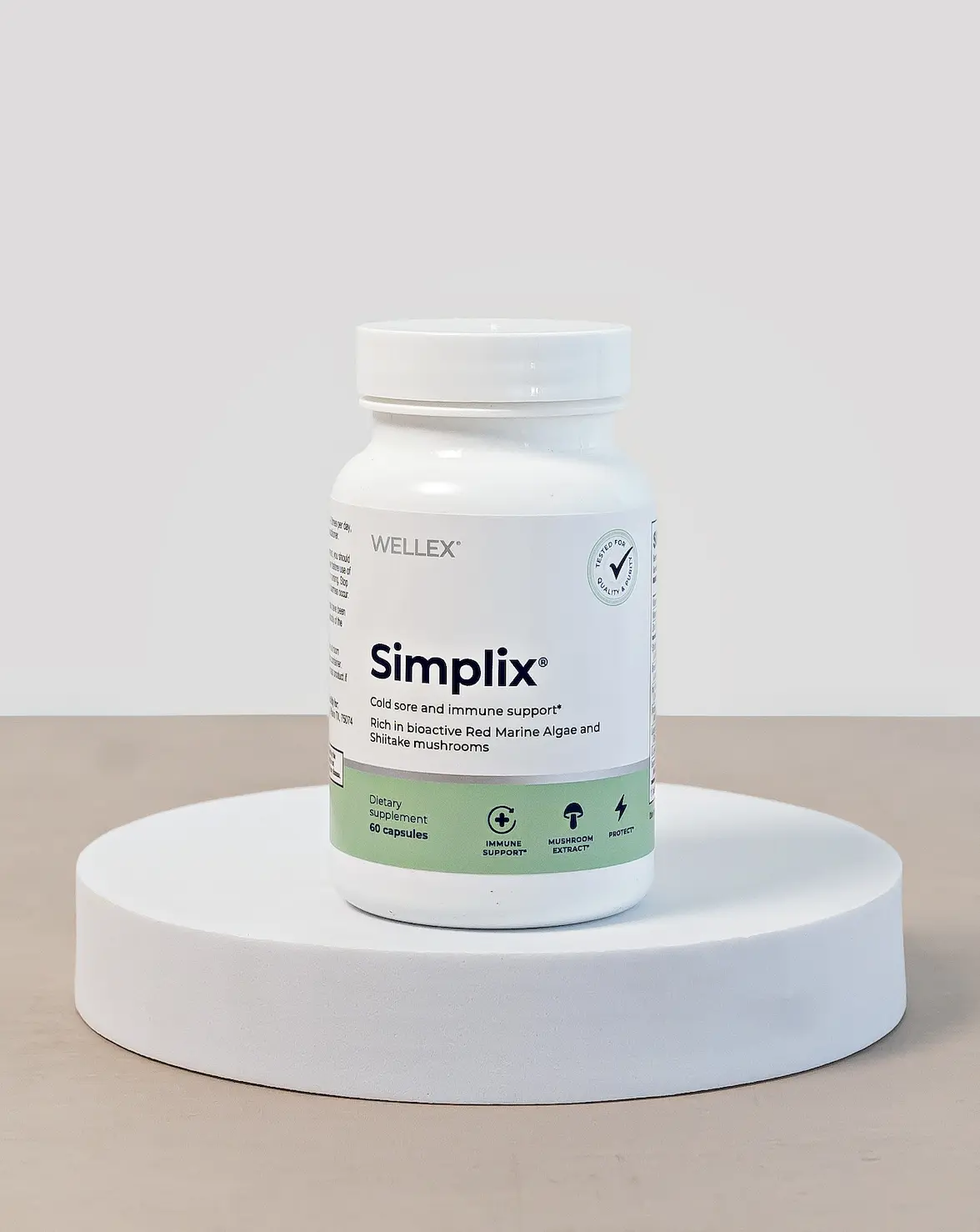
Simplix Viral Defense
Cold Sore & HSV Support
Synergistic formula combining L-Lysine, shiitake mushroom, and marine bioactives for comprehensive immune support.
SHOP NOW & SAVE 15%