Herpes simplex virus (HSV) infections affect millions worldwide and are caused mainly by two types: HSV-1, which primarily leads to oral herpes (cold sores), and HSV-2, which is usually responsible for genital herpes.
A common concern is whether herpes can be transmitted by sharing drinks, straws, or utensils.
Understanding the nature of herpes transmission can help clarify the actual risks involved and guide safe social practices.
How Herpes Is Transmitted
Herpes viruses spread through direct skin-to-skin contact with an infected person.
HSV-1 is most often transmitted via oral contact such as kissing or oral sex, while HSV-2 spreads through genital or anal contact during sexual activity.
Both viruses can be transmitted even when no visible sores are present, due to asymptomatic viral shedding.
Transmission requires contact with infected secretions or sores.
The virus does not survive long outside the human body, making indirect transmission through objects or surfaces unlikely.
The Risk of Getting Herpes from Sharing Drinks
Sharing drinks, straws, or utensils is a common social activity, but many wonder if it poses a risk for herpes transmission.
The good news is that the herpes virus is fragile outside the body and cannot survive long on inanimate objects like cups or bottles.
For HSV-1 (oral herpes), transmission through saliva is possible only if the person sharing the drink has an active cold sore and the virus is transferred directly from the sore to your mucous membranes.
Even then, this mode of transmission is considered rare due to the virus’s short survival time on surfaces.
When no active sores are present, the likelihood of contracting herpes from shared drinks is extremely low to negligible.

Genital Herpes and Sharing Drinks
Genital herpes, caused mainly by HSV-2, is almost exclusively transmitted through direct genital or anal skin-to-skin contact during sexual activity. It is not spread through saliva or by sharing drinks or utensils. Because HSV-2 requires direct contact with infected genital skin or secretions, sharing drinks does not pose any risk for genital herpes transmission.
Best Practices to Minimize Herpes Transmission
Although the risk of catching herpes from sharing drinks is very low, it is still advisable to avoid sharing cups, straws, or utensils with someone who has an active cold sore.
This simple precaution helps reduce any theoretical risk and prevents spreading other infections.
Maintaining good hygiene, such as washing hands regularly and avoiding touching cold sores, further reduces the chance of spreading herpes to other parts of your body or to others.
Sharing a Drink and Herpes FAQs
Can I get cold sores from sharing a drink with someone who has an active outbreak?
While possible, the risk of contracting oral herpes (HSV-1) from sharing a drink during an active cold sore outbreak is very low. The virus does not survive long on cups or straws, and transmission requires direct contact with the virus from sores.
Is genital herpes (HSV-2) transmitted through sharing drinks?
No. Genital herpes is transmitted through direct genital contact during sexual activity and is not spread through saliva or sharing drinks.
Can herpes be spread through saliva on glasses or utensils?
Herpes virus can be present in saliva during outbreaks, but it dies quickly on surfaces. The chance of transmission through saliva left on glasses or utensils is extremely low.
Should I avoid sharing drinks with someone who has a history of cold sores?
To minimize any risk, avoid sharing drinks, straws, or utensils with someone who has an active cold sore. When no sores are present, the risk is negligible.
How can I protect myself from getting herpes in social situations?
Avoid sharing drinks, utensils, or lip products with others, especially if they have visible cold sores. Practice good hand hygiene and avoid kissing or intimate contact during active outbreaks.

Image: Bravado Labs Advanced Lysine Immune Boost
Bravado Labs Advanced Lysine Immune Boost
Why we love it:
- Verified Customer Favorite
- High Quality Ingredients
As an affiliate, we earn from qualifying purchases.
Recommended Supplements for Herpes Management
Simplix Viral Defense
Cold Sore & HSV Support
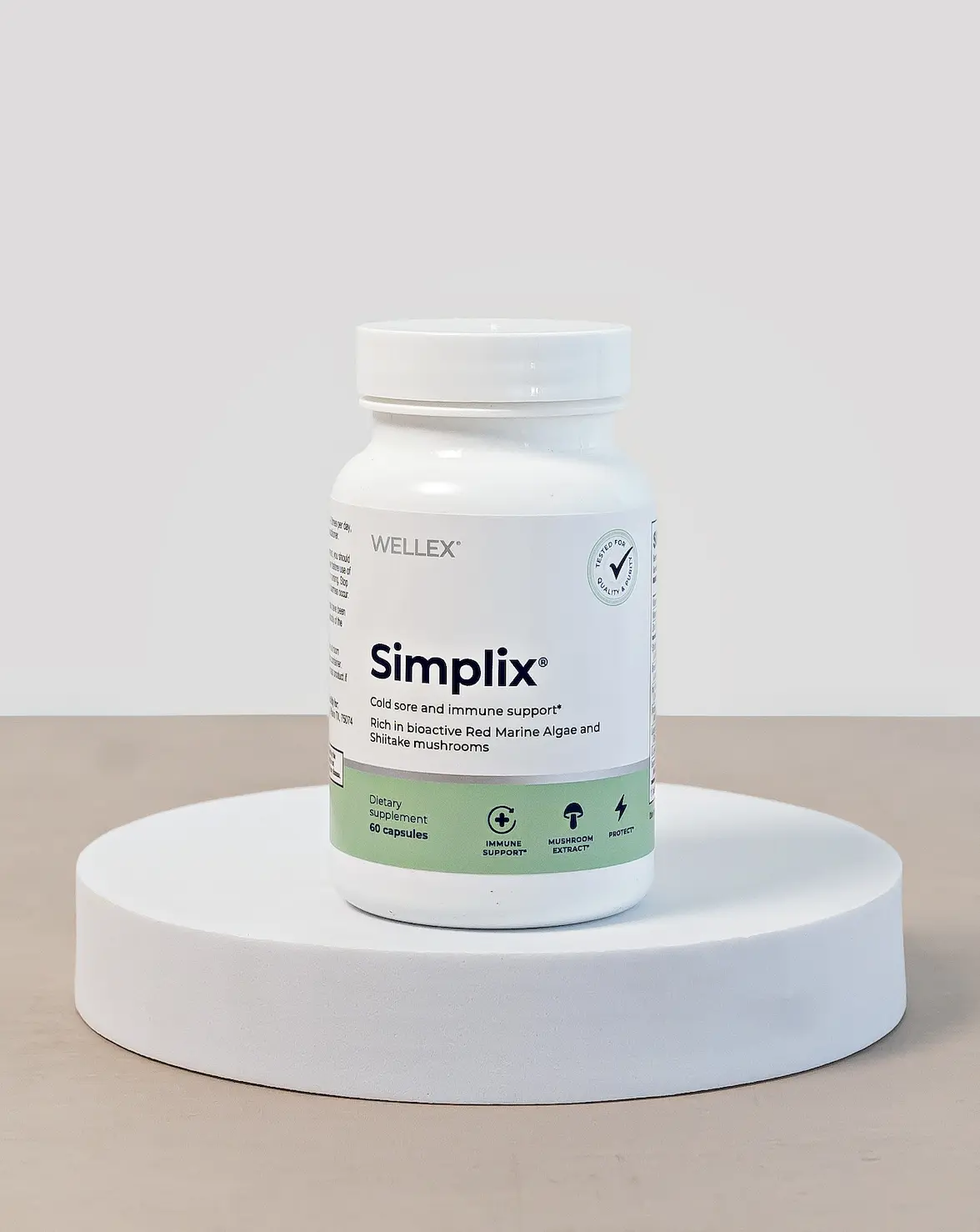
Simplix Viral Defense
Cold Sore & HSV Support
Synergistic formula combining L-Lysine, shiitake mushroom, and marine bioactives for comprehensive immune support.
SHOP NOW & SAVE 15%